Benazir Kafalat Program New Payment Schedule 2026: A Complete Guide to the Rs. 13,500 Update
The Benazir Kafalat Program has long been a lifeline for millions of families across Pakistan. As we move into 2026, the government of Pakistan has introduced significant updates to this essential social safety net. With the rising cost of living and economic pressures facing low-income households, the program has been expanded and digitized to ensure that help reaches those who need it most effectively and transparently.
This article details everything you need to know about the new payment schedule, the increased budget, the new registration process, and how beneficiaries can receive their stipend of Rs. 13,500 starting in January 2026.
Overview of the 2026 Program Update
The primary goal of the Benazir Kafalat Program in 2026 is to support needy households, specifically targeting eligible women from low-income families. Recognizing that prices for essential goods have gone up, the government has decided to increase the quarterly cash transfer amount.
For the year 2026, the new stipend amount has been set at Rs. 13,500 per family. This is a major improvement designed to help families cope with inflation. The program aims to reach more than 10.5 million beneficiaries across the country. To manage this massive distribution of funds, the government has introduced a “New Payment Schedule” that rolls out the payments in phases. This phased approach is designed to make the process smoother, safer, and more digital, ensuring that money is deposited directly into digital accounts or distributed through authorized agencies without the chaos of overcrowding.
This year’s update is not just about more money; it is about better delivery. The system now prioritizes biometric verification and recertification through the National Socio-Economic Registry (NSER). The government has promised absolute transparency, using modern technology to make the program fraud-proof.
The Increased Budget: A Commitment to the Poor
One of the most significant headlines for the 2026 program is the massive increase in the overall budget. The government has allocated Rs. 600 billion for the Benazir Kafalat program for this year. This is a substantial rise compared to the previous allocation of Rs. 500 billion.
Why was the budget increased?
The budget was increased for two main reasons:
- To Cover Inflation: The cost of living has risen by approximately 25 percent. To ensure that the cash transfer still has “real value” for the families receiving it, the budget had to go up. The 43 percent increase in the budget (in real terms) ensures that the new stipend of Rs. 13,500 can actually help families buy food and essentials despite higher prices.
- To Add New Families: The increased budget allows the program to bring 1 million new families into the fold. These are families who may have fallen into poverty due to recent economic shocks, targeted taxes, or other financial difficulties.
This budget is funded through government provisions and international assistance, ensuring its security even if there are outside economic pressures. The funds are distributed carefully among the provinces. For example, Punjab receives about 45 percent of the funds, and Sindh receives 30 percent, with the remaining balance distributed to other regions. This ensures that the money goes where the population of beneficiaries is highest.
The New Payment Schedule: Phased Disbursement
In the past, releasing payments all at once could lead to long lines, system crashes, and confusion. To solve this, the 2026 payments are being released in four distinct phases. This “Phased Approach” helps mitigate queue congestion and allows the government to track the distribution daily.
The disbursement of the Rs. 13,500 stipend begins on January 10, 2026. Here is how the schedule is broken down:
Phase 1: The Urban Poor
- Dates: January 10 to January 14, 2026.
- Target Group: This first phase focuses on households in urban slums. Beneficiaries living in cities who are registered and eligible will receive their funds during these first four days.
Phase 2: Rural and Flood-Hit Areas
- Dates: January 15 to January 21, 2026.
- Target Group: The second phase moves to the villages. It specifically targets rural villages and areas that have been hit by floods. This is a critical phase as these populations often have the most urgent need for support.
Phase 3: Remote Areas
- Dates: January 22 to January 28, 2026.
- Target Group: This phase covers the remote and hard-to-reach areas of Pakistan. These are locations that might be far from main cities and require extra logistical effort to reach.
Phase 4: Pending Cases
- Dates: January 29 to February 4, 2026.
- Target Group: The final phase is a “mop-up” phase. It is for anyone who was missed in the earlier phases or had pending verifications.
By following this schedule, the government ensures that over 10.5 million eligible families receive their money in an organized way. SMS alerts from the 8171 service are sent to beneficiaries to confirm which phase they are in and when their money is ready.
Breakdown of the Payment Amount
The payment structure has been adjusted to provide more help to those who need it.
- Standard Stipend: The quarterly payment has increased from Rs. 10,500 to Rs. 13,500. This adds Rs. 3,000 specifically to help with inflation.
- Special Bonus: An additional Rs. 2,500 is provided for families with disabled persons or orphans.
- Purchasing Power: This increase is expected to enhance the purchasing power of 70 percent of women beneficiaries, allowing them to buy more food and pay for education.
It is important to note that this increase applies to eligible persons confirmed by the NSER update. The system cross-checks with the Federal Board of Revenue (FBR) database to ensure that ineligible persons do not receive these funds.
The New Digital Registration Process
For 2026, the registration process has been completely revolutionized. It is now fully digital and much simpler than before. The new system, which was launched after December 2025, is designed to be fast and user-friendly.
Key Improvements
- Faster Processing: The time it takes to process an application has been reduced from 45 days to just 21 days.
- Paperless: The new system eliminates tedious paperwork. Instead of carrying piles of documents, applicants can upload everything via a mobile app.
- Advanced Security: The process uses biometric and facial recognition technology to prevent identity theft.
Step-by-Step Registration Guide
If you need to register for the program, here is the new procedure:
1. Initial Online Pre-Screening
The first step is to check if you are eligible. You can do this by visiting the website 8171.bisp.gov.pk or by downloading the updated BISP Mobile App (available on Android and iOS).
- Enter your 13-digit CNIC number.
- Enter your registered mobile number.
- Enter the captcha code shown on the screen.The system will check your details against the NADRA and NSER databases. Within 60 seconds, it will tell you if you are eligible for a survey, if you need to schedule an appointment, or if you are already registered.
2. Document Upload
If you are eligible to proceed, you can upload your documents directly through the app or portal. You will need:
- Scanned copies or photos of the CNIC (front and back) of the applicant and the head of the family.
- A recent utility bill or a domicile certificate.
- Selfie Verification: You must take a selfie holding your CNIC. This is for facial identification validation.
- Income affidavit (this is auto-generated by the app).
3. Home Survey Scheduling
After your documents are uploaded, eligible applicants will receive an SMS giving them a slot for a survey. Mobile teams will visit your home using tablets equipped with GPS.
- What they check: They assess 42 different poverty indicators, such as how many rooms are in your house, the number of people living there, livestock, and appliances.
- Staff: The program prioritizes using women interviewers, especially for female-headed households, to ensure comfort and cultural sensitivity.
- Result: The tablet calculates a real-time NSER score to give provisional eligibility.
4. Biometric Enrollment
Once the survey is done, you must visit one of the 2,000+ upgraded enrollment centers. These are located at tehsil offices, NADRA centers, or mobile vans.
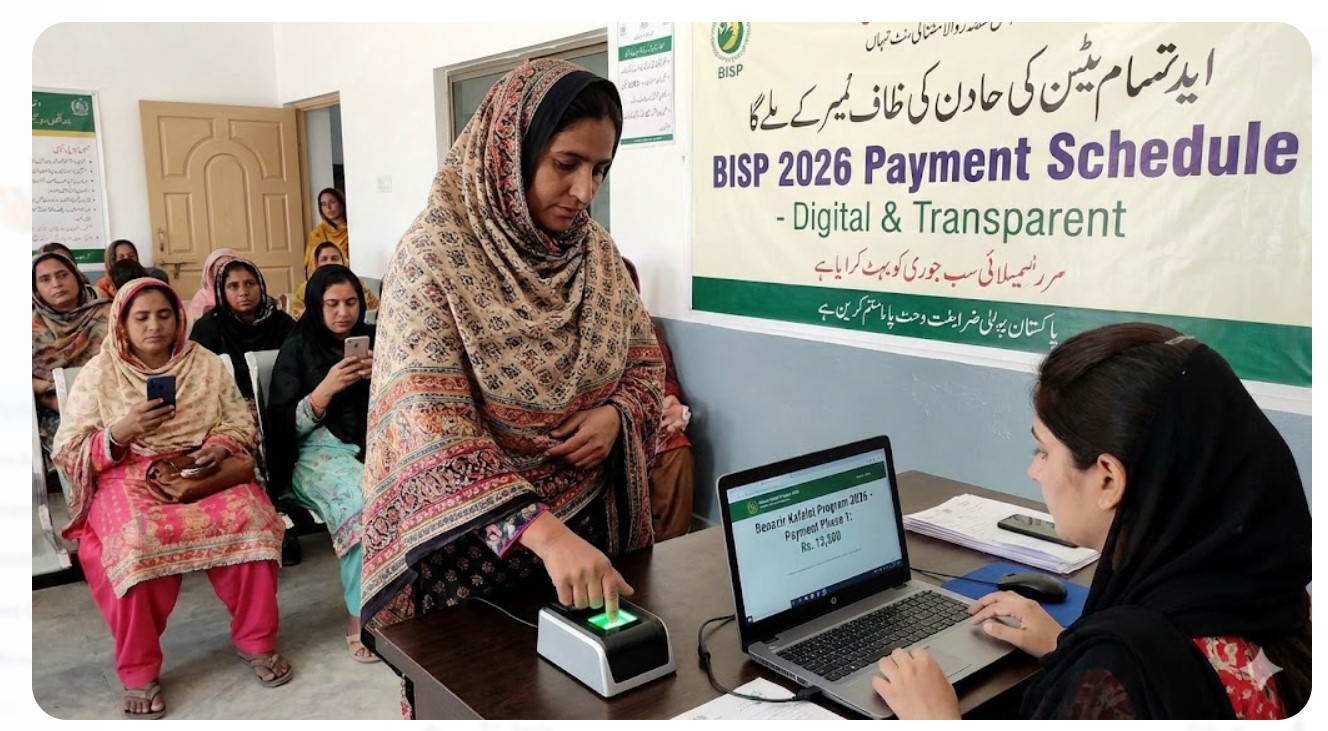
- Triple Verification: You will undergo a triple check involving your thumbprint, a scan, and facial recognition.
- Raast ID: Your account will be linked to a Raast ID.
- Digital Wallet: An instant digital wallet is created for you so payments can be sent directly.
- Family Mapping: All CNICs in your household are linked to the primary beneficiary. This service is free.
5. Final Confirmation and Training
If you are provisionally approved for the Rs. 13,500 payment, you must complete a mandatory 15-minute digital literacy session. This session teaches you how to use an ATM and how to navigate the 8171 app. Once this is done, your registration is complete, and your funds will be auto-linked to Raast, HBL, or EasyPaisa for the January 2026 payment.
How Payments are Released
The government has set up a secure system to release payments. This ensures that the money reaches the right people and is not stolen.
1. Digital First Crediting
About 70% of the funds are credited directly to digital accounts. This includes Raast-enabled accounts, HBL wallets, or EasyPaisa accounts. If you have one of these, you can access your money instantly through an ATM or the app.
2. Agent Network
For those who prefer or need to collect cash in person, the money cascades to over 40,000 points across the country. These include JazzCash franchises and tehsil centers.
3. Mandatory Biometrics
Whether you use an ATM or go to an agent, you must provide a biometric scan (thumb or iris). This is a strict rule to prevent fraud.
4. QR Receipts
Every transaction generates a QR receipt. This receipt includes your ID, a time stamp, and the agent’s details. If there is any problem, this receipt helps resolve issues through the 8171 portal.
Staying Updated: The 8171 SMS Service
Communication is key to this new schedule. The government uses the 8171 SMS service to keep beneficiaries informed. You do not need to check manually every day; the system sends updates automatically.
- Payment Alerts: You will receive a clear message like: “Rs. 13,500 credited to your account under Phase 2. Withdraw by April 10, 2026.”
- Real-Time Data: The SMS draws data from the central NSER database. It shows what phase you are in, your payment history for the last six months, and any future actions you need to take.
- Location Help: The service can even suggest the nearest withdrawal location based on your registered address.
- Verification: You can verify your status by sending your CNIC number to 8171.
Transparency and Impact
The government has placed a high priority on transparency. To avoid misuse of the Rs. 600 billion budget, the funds are distributed quarterly under the supervision of an annual audit institution.
The impact of this program is already being felt. Surveys show that in districts where the program is active, hunger has decreased by 15 percent. By prioritizing female-headed households and including provisions for child nutrition (Nashonuma), the program is not just giving cash; it is investing in the health and future of the next generation. The integration of Raast and strict monitoring has also helped cut down complaints by over 50 percent, with almost 98 percent of the distribution being reported as successful.
Conclusion
The Benazir Kafalat Program New Payment Schedule 2026 represents a major step forward in Pakistan’s social welfare efforts. By increasing the stipend to Rs. 13,500, expanding the budget to Rs. 600 billion, and modernizing the delivery system with digital tools and phased releases, the government is ensuring that support reaches the 10.5 million most vulnerable families efficiently.
Starting January 10, 2026, millions of women across urban and rural Pakistan will begin receiving their payments. With the help of the 8171 SMS service and the new digital registration process, accessing these funds has never been easier or more transparent. This initiative not only provides immediate financial relief but also contributes to the long-term reduction of poverty in the country.